Source water based self leveling polyurethane mortar for floors, walls, and concrete
Compare 24 listings for water based self leveling polyurethane mortar from suppliers in China. Buyers can review specifications, prices, and customization options for floor surface coatings and ground applications.
Key considerations
Products List




Comprehensive Sourcing Guide
Strategic Sourcing Guide for Water-Based Self-Leveling Polyurethane Mortar
Procuring industrial flooring solutions requires a nuanced understanding of material science, supply chain logistics, and regulatory compliance. For buyers specifically targeting water-based self-leveling polyurethane mortar, the market presents a complex array of options defined by varying chemical compositions, application methods, and regional manufacturing standards. This guide synthesizes available product data to provide a disciplined framework for evaluating suppliers and specifications. The focus remains on evidence-based attributes observed in current listings, ensuring that procurement decisions are grounded in verified facts rather than unverified marketing claims.
Technical Specifications and Material Composition
The technical profile of water-based self-leveling polyurethane mortar is distinct from traditional solvent-based systems. Based on observed product attributes, the primary raw material for many competing formulations is polyurethane, which offers superior flexibility and durability compared to epoxy-based alternatives. However, the market also contains significant volumes of epoxy floor coatings, necessitating careful differentiation. Buyers must verify the "Main Raw Material" specification for each lot, as the distinction between polyurethane and epoxy dictates the final performance characteristics regarding chemical resistance and thermal stability.
The physical state of the product is consistently observed as a liquid, which is critical for the self-leveling mechanism. The application method varies significantly across listings, with some products designed for brush application while others require spray or roller methods. For a true self-leveling mortar, the fluidity must allow the material to flow and settle into a smooth surface without manual leveling tools, though the "Method" attribute in some listings explicitly mentions "Roller" or "Brush," suggesting these may be topcoats or specific mortar variants rather than pure self-leveling underlayments.
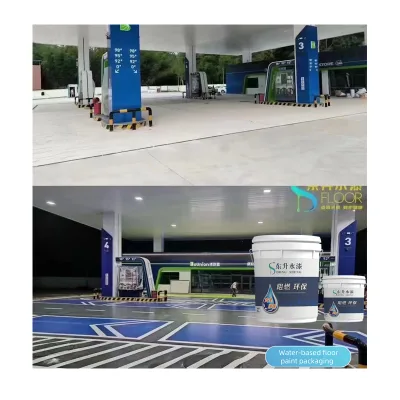
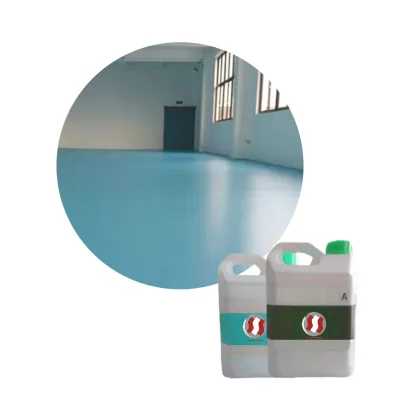
Color and appearance are highly customizable. Observed data indicates that products are available in yellow, blue, and a wide range of rich, customizable colors. The surface finish is typically described as smooth, and the product often functions as a finish coat. The packing standard varies, with common configurations including buckets, bags, or a combination of bucket and bag. Standard package sizes observed include 20kg bags or 20L containers, though single package dimensions can range from 30x30x20 cm. Buyers must confirm the "prod_standard" for each supplier, as some list 20L while others specify 20kg, which impacts shipping weight calculations and volume requirements.
Compliance, Certification, and Regulatory Verification
Navigating the regulatory landscape is essential for industrial procurement, particularly when dealing with chemical products. The supplied data highlights several certifications and standards that buyers should verify during the supplier evaluation process. Specific listings mention compliance with ISOCCC, RoHS, and ISO standards. Additionally, chemical identification numbers such as EINECS No. 201-177-9 and CAS No. 106-89-8 are provided for certain formulations. These identifiers are crucial for verifying the chemical composition and ensuring the product meets international safety and environmental regulations.
However, the presence of a certification label in a product listing does not guarantee that every unit of that product holds that certification. Buyers must treat these as observations of specific batches or models rather than universal attributes of the entire product line. The "Hygienic" attribute is noted as "High" for some products, suggesting suitability for environments with strict cleanliness requirements, but this should be validated against specific industry hygiene standards relevant to the buyer's facility.
When evaluating compliance, the "Other Name" or "Keywords" provided, such as "Water-Based Polyurethane Mortar" or "Epoxy Floor Color Paint," serve as initial filters. Buyers must ensure that the product's chemical profile aligns with local environmental regulations regarding volatile organic compounds (VOCs), especially since the core keyword specifies "water-based" systems. The "Feature" attribute often lists "Eco-friendly," but this is a qualitative claim that requires supporting documentation, such as third-party test reports, to be substantiated.
Cost Drivers and Pricing Structures
The pricing landscape for water-based polyurethane mortars is influenced by several factors, including raw material costs, packaging specifications, and order volume. The observed price range in the market spans from $1.50 to $400 USD, a wide variance that reflects differences in product quality, concentration, and packaging size. A unit price of $1.50 likely corresponds to a small sample or a specific component, whereas the $400 figure may represent a bulk industrial order or a specialized high-performance formulation.
Minimum Order Quantity (MOQ) is a significant cost driver. Data indicates an MOQ range of 1 to 500 units, with specific listings showing an MOQ of 200kg for certain epoxy-based products. For polyurethane mortars, the MOQ may vary based on the supplier's production capacity and the specific model number, such as JCPUM, SH-M01, or SPR-2310P. Buyers should be aware that smaller orders might incur higher per-unit costs, while larger orders could benefit from economies of scale.
The "Single gross weight" and "Single package size" are critical for calculating total shipping costs. For instance, a product with a gross weight of 1.000 KG and dimensions of 30x30x20 cm will have different freight implications compared to a 20kg bag. The "Shipping" method is predominantly listed as "Sea," which is typical for heavy industrial materials, but buyers must verify if air freight or land transport is available for urgent or smaller shipments. The "Drying Method" of "Drying" also impacts the total project timeline and associated labor costs, as faster drying times can accelerate floor installation schedules.
Typical Applications and Performance Characteristics
The application scope for these materials is broad, covering various industrial and commercial environments. The "Application" attribute frequently cites "Floor Surface Coating," "Ground," and "Suitable for all floors and concrete." This versatility makes the product suitable for warehouses, factories, garages, and commercial spaces. The "Feature" list includes "Anti-Penetration" and "Resistance High Low Temperature," indicating that the material is designed to withstand harsh conditions, including thermal cycling and chemical spills.
The "Level" of the product is often designated as a "Finish Coat," suggesting it is the final layer in a multi-step flooring system. However, the "Other Names" such as "Floor paint system" imply that the product may be part of a larger kit or require specific primers and intermediate coats. The "Application Method" of "Brush," "Spray," or "Roller" must be matched to the specific project requirements. For self-leveling applications, the material must possess the correct viscosity to flow evenly, though some listings explicitly mention manual application methods, which may indicate a different product class or a specific use case.
The "Formation Mechanism" is described as "Conversion Type," which refers to the chemical curing process. This is distinct from simple drying and implies a cross-linking reaction that enhances durability. The "State" is consistently "liquid state," which is necessary for the self-leveling property. Buyers should verify the "MF" (Molecular Formula) or consult customer service for this data, as it is often listed as "consult customer service" in general listings. Understanding the curing mechanism is vital for determining the appropriate environmental conditions (temperature and humidity) required during application.
Supplier Evaluation and Geographic Considerations
Geographic origin plays a significant role in the supply chain dynamics of flooring materials. The observed data points to suppliers located in Shandong, Tianjin, Sichuan, and Dongguan, China. These regions are known for their manufacturing capabilities in the chemical and construction sectors. The "Place of Origin" and "prod_origin" fields provide transparency regarding the manufacturing base, which can influence lead times and shipping logistics.
When evaluating suppliers, buyers should look for consistency in product attributes. For example, a supplier offering "Water-Based Polyurethane Mortar" should clearly distinguish it from "Solid Color Epoxy Floor Coating," as the raw materials and performance profiles differ. The "Brand Name" is listed as "Dongsheng" in some contexts, but buyers should not rely on brand recognition alone. Instead, they should verify the "prod_model" (e.g., JCPUM, SH-M01, SPR-2310P) to ensure they are sourcing the exact specification required for their project.
The "Customization" attribute is marked as "Available" for many products, allowing buyers to request specific colors, packaging, or chemical formulations. This flexibility is a key differentiator in the market. However, customization often comes with higher MOQs or longer lead times. Buyers must balance the need for specific product attributes against the constraints of their procurement schedule. The "Shipping" method of "Sea" suggests that international buyers should plan for extended transit times, especially if the supplier is located in inland provinces like Sichuan.
Quality Control and Long-Term Procurement Strategy
Ensuring long-term quality requires a robust quality control (QC) strategy. Buyers should request test results for key performance indicators such as adhesion strength, abrasion resistance, and chemical resistance. While the "Feature" attributes list "Resistance High Low Temperature" and "Anti-Penetration," these claims must be backed by empirical data. The "Certification" list includes ISO and RoHS, but buyers should verify the validity of these certificates for the specific batch being purchased.
For long-term procurement, establishing a relationship with a supplier who offers consistent "prod_standard" and "prod_packing" is essential. Variations in packaging, such as switching from "Bucket + Bag" to "Bucket" or "Bag," can affect storage and handling procedures. The "Single gross weight" and "Single package size" should be standardized to simplify logistics. Additionally, the "Drying Method" and "Application Method" should be consistent to ensure that the installation team can maintain a uniform workflow.
Buyers should also consider the "Other Names" and "Keywords" used by suppliers to ensure they are comparing apples to apples. A product labeled as "Epoxy Floor Color Paint" may not be suitable for a project requiring polyurethane properties. The "Main Raw Material" is the most critical differentiator, and buyers must explicitly confirm whether the product is polyurethane-based or epoxy-based before placing an order. By focusing on these verified attributes and avoiding assumptions about unlisted specifications, buyers can mitigate risks and secure a reliable supply of high-quality water-based self-leveling polyurethane mortar.
Comparative Analysis of Product Attributes
To facilitate decision-making, the following table summarizes the key attributes observed in the market data, highlighting the variations buyers must navigate.
| Attribute Category | Observed Variations | Verification Requirement |
|---|---|---|
| Main Raw Material | Polyurethane, Epoxy | Confirm "Main Raw Material" field; distinguish from epoxy coatings. |
| Appearance/State | Powder, Liquid | Verify "State" is liquid for self-leveling; check for powder variants. |
| Color | Yellow, Blue, Customizable | Confirm "Color" or "Colors" field; check for "Customized" availability. |
| Packaging Standard | 20L, 20kg, 20KG/bag | Verify "prod_standard" and "prod_packing" for shipping calculations. |
| Application Method | Brush, Spray, Roller | Match method to project needs; self-leveling may not require manual tools. |
| Origin | Shandong, Tianjin, Sichuan, Dongguan | Check "prod_origin" for logistics planning and lead time estimation. |
| Certification | ISOCCC, RoHS, ISO | Verify specific certificate validity for the batch; do not assume universal coverage. |
| MOQ | 1, 200kgs, up to 500 | Confirm "MOQ" for budgeting and inventory planning. |
This comparative view underscores the importance of precise specification matching. The diversity in attributes, from raw materials to packaging standards, requires a disciplined approach to sourcing. By rigorously checking these fields against project requirements, buyers can ensure they procure materials that meet both technical and operational needs.
FAQs
What is the main raw material for water based self leveling polyurethane mortar?
The primary raw material is polyurethane, which offers superior flexibility compared to epoxy alternatives. Some listings also show epoxy-based formulations, so buyers must verify the specific material composition before ordering to ensure the correct performance profile.
How is the product typically applied on concrete surfaces?
Application methods vary by product model, including brush, spray, or roller techniques. While some variants function as finish coats requiring manual leveling, true self-leveling mortars rely on fluidity to settle into a smooth surface without extensive manual intervention.
Which certifications are commonly observed for these flooring products?
Common certifications include ISOCCC, RoHS, and ISO standards for specific batches. Buyers should verify that the chemical identification numbers like EINECS or CAS match the requested safety and environmental regulations for their specific industrial facility requirements.
Can the product color be customized for specific projects?
Yes, customization is available for colors such as yellow, blue, and rich custom shades. Buyers should note that customization may impact the minimum order quantity and lead time, so early coordination with the supplier is essential for large orders.
What is the standard packaging size for these materials?
Standard packaging includes 20kg bags, 20L buckets, or combinations of bucket and bag. Specific dimensions like 30x30x20 cm are observed for single packages, which directly influences shipping weight calculations and storage requirements for the buyer.
Where are the primary manufacturing locations for these products?
Manufacturing origins are primarily located in Shandong, Tianjin, Sichuan, and Dongguan in China. These regional hubs offer varying lead times and shipping logistics, with sea freight being the predominant method for international transport of these heavy industrial materials.